Menu
Same-Day Service Available!
Bathroom tile can look bright and polished one day, then cloudy and dull surprisingly fast. Soap scum is often responsible. Every shower leaves behind small amounts of soap, body oils, minerals, moisture, shampoo, conditioner, and other residue. Over time, those layers build on tile and settle into grout lines.
The good news is that homeowners can slow the buildup with a few simple habits. Wiping away excess water, improving bathroom airflow, rinsing surfaces, and keeping up with regular cleaning can make a noticeable difference. Professional tile & grout cleaning can provide a deeper reset when everyday maintenance is no longer enough.
For families in Cordova, TN 38016, bathroom cleaning can be especially frustrating when grout continues looking dingy even after the tile itself has been wiped down. Grout has a different texture and structure than smooth tile, which means dirt and residue can collect in places a quick wipe may miss.
Safe-Dry® approaches cleaning with the needs of busy families in mind. Our goal is to help create cleaner, healthier, more comfortable spaces without making home care complicated. Homeowners interested in additional local services can learn more about Safe-Dry® Carpet Cleaning of Cordova and the cleaning options available throughout the area.
Soap scum rarely appears all at once. It develops gradually.
After a shower, water remains on tile, grout, glass, fixtures, and other bathroom surfaces. As the water dries, minerals and product residue can stay behind. Traditional soaps can also interact with minerals in water and create a film that clings to bathroom surfaces.
At first, the film may be almost invisible. With repeated showers, however, new residue lands on top of old residue. Body oils, shampoo, conditioner, shaving products, dirt, and dust can become part of the buildup.
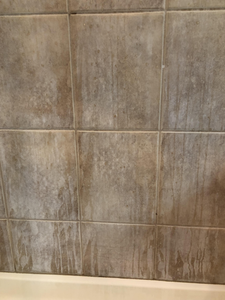
Eventually, shiny tile begins looking hazy. Grout lines may darken. Corners and edges may feel sticky or rough. Areas around faucets, tubs, and shower floors can start looking dull even shortly after routine cleaning.
Humidity adds another challenge. Bathrooms naturally experience frequent moisture, and surfaces that stay damp for long periods take longer to fully dry between uses.
The U.S. Environmental Protection Agency explains that moisture control is an important part of maintaining healthy indoor spaces. Its homeowner guidance specifically recommends increasing bathroom ventilation, using exhaust fans, and addressing persistent moisture problems.
Soap scum itself is mainly a surface-maintenance issue, but reducing excess moisture also supports a cleaner bathroom overall.
Many homeowners notice an interesting pattern. The tile still looks fairly clean, while the grout lines seem much darker.
The difference comes down partly to the surface.
Glazed ceramic and porcelain tile usually have relatively smooth finishes. Grout, however, has a more textured surface with tiny spaces where soil and residue can collect.
Every time dirty water passes over a grout line, some material may remain behind. Mopping or wiping can improve the surrounding tile while leaving grime inside recessed grout areas.
Bathroom floors face additional challenges because they collect everything that falls from above. Water droplets, dust, hair products, skin oils, tracked-in dirt, and cleaning residue can eventually reach the grout.
Shower walls experience a slightly different problem. Water carrying soap and personal-care products runs downward and often settles along lower grout lines, corners, shelves, and edges.
Regular tile & grout cleaning helps prevent those layers from becoming increasingly difficult to remove.
Professional cleaning can also reach recessed grout lines more effectively than casual surface wiping. Safe-Dry® maintains dedicated specialty cleaning services for these types of surfaces, including its tile and grout specialty cleaning division.
Water quality can influence how quickly bathroom surfaces appear cloudy.
Water containing higher levels of minerals can leave visible deposits behind as droplets evaporate. When mineral residue combines with soap and other bathroom products, the resulting film can become increasingly noticeable.
You may see white marks around fixtures, cloudy patches on darker tile, or stubborn residue near the lower part of a shower wall.
Cleaning harder is not always the answer.
Frequent aggressive scrubbing can eventually wear certain finishes, damage sealants, or create unnecessary work. A better approach involves reducing how much residue remains on the surface in the first place.
Removing water after showers can help. Maintaining airflow can help. Gentle routine cleaning can help as well.
Prevention is usually easier than attacking months of accumulated residue in one afternoon.
A bathroom does not need a complete cleaning after every shower. A few minutes of simple care can reduce the amount of residue that has time to dry onto the surface.
Consistency matters more than intensity.
Before leaving the shower, look for obvious shampoo, conditioner, body wash, or soap residue on the walls and floor.
A quick rinse with clean water can carry away some of the product before it dries.
Pay particular attention to shelves, corners, niches, lower walls, and the area surrounding bottles. These spots often collect product drips that later turn sticky.
Rinsing will not replace cleaning, but it can reduce the amount of material left behind.
Use a shower squeegee or clean microfiber cloth to remove water from smooth tile surfaces.
Start near the top and work downward.
The process takes only a few minutes, yet it reduces the amount of water that must evaporate naturally. Less standing moisture also means fewer opportunities for mineral deposits to remain on the tile after water dries.
Focus on areas where water commonly collects, including shower doors, lower walls, ledges, and the edge of the tub.
Water tends to collect in low areas.
Look at corners, transitions, shelves, shower-floor grout, and the line where the wall meets the tub or floor.
If you notice pooled water, wipe it away.
These small areas are easy to ignore because they make up only a tiny part of the bathroom. However, repeated moisture and residue can make them some of the most difficult areas to maintain later.
Run the bathroom exhaust fan during and after showers when possible.
If appropriate for the home and weather conditions, opening a window can also improve airflow.
EPA guidance notes that bathrooms benefit from exhaust fans or open windows because increased ventilation helps control moisture.
The fan should ideally move moist air outside rather than simply circulating it into another indoor area.
Wet towels, bathmats, washcloths, shower curtains, and cleaning cloths can hold moisture.
Spread towels out instead of leaving them bunched together. Allow bathmats to dry. Keep shower curtains extended rather than folded tightly against one side.
Small changes in drying habits can help the entire bathroom return to a drier condition sooner.
There is no single schedule that works for every household.
A guest bathroom used twice a week will not accumulate residue at the same rate as the main bathroom in a home with several family members.
Usage should guide the schedule.
Light surface care can happen frequently, while more thorough tile & grout cleaning can be scheduled as needed based on visible buildup.
A bathroom used every day may benefit from quick wipe-downs throughout the week. A deeper cleaning can then address grout lines, corners, fixtures, and harder-to-reach areas.
Waiting until the tile looks dramatically different often makes the job more difficult.
A simple test can help. Compare the tile near a heavily used shower area with a less exposed section. If one area has become noticeably duller, the surface may have accumulated film even if the change happened too gradually to notice day by day.

More cleaning product does not always mean more cleaning power.
Using too much product can leave residue behind, especially when the cleaner is not completely rinsed away.
Homeowners should follow the tile manufacturer's care recommendations whenever possible because natural stone, ceramic, porcelain, and other materials can have different cleaning requirements.
Avoid assuming every bathroom surface can tolerate the same product.
Natural stone may react poorly to acidic cleaners. Certain sealants can be affected by aggressive chemicals. Abrasive pads may scratch some finishes.
When you are unsure, test a small inconspicuous area before applying a product across the entire surface.
Using an appropriate product in the right amount is usually more effective than combining several strong cleaners.
Never mix household cleaning products unless the labels specifically indicate that doing so is safe. The CDC also advises homeowners not to mix cleaning products, particularly bleach and ammonia, because dangerous vapors can result.
Good tile & grout cleaning should improve the surface without introducing unnecessary risk.
Soap and detergent residue can become part of the problem when products are overused.
A heavy layer of cleaner may loosen soil, but some of the cleaning solution still needs to be removed afterward. If the surface is simply left to dry, residue can remain.
The result may be a floor or wall that looks good immediately after cleaning but develops a haze later.
Rinsing appropriately and drying the surface can help prevent this cycle.
Safe-Dry® focuses on low-residue, family-friendly cleaning methods across its services because leftover product can contribute to recurring soil and unnecessary buildup.
The same principle applies to routine bathroom care: use what you need, remove the soil, rinse when required, and allow surfaces to dry.
Most people naturally clean the center of the shower walls and the most visible part of the floor.
Soap scum often builds elsewhere.
Lower wall sections receive runoff from everything used above them. Corners receive water but less direct wiping. Shelves collect rings under bottles. Shower-door tracks hold water and product residue. Tile surrounding faucets receives splashes throughout the day.
The wall directly beneath a soap dish is another common trouble spot.
Grout near the shower floor may accumulate more buildup than grout near eye level because gravity continually moves water downward.
Bathroom tile outside the shower can develop its own layer of soil from foot traffic, dust, cosmetics, hairspray, and moisture.
During routine tile & grout cleaning, work systematically instead of cleaning only the areas that look dirty from across the room.
The tool you use can be just as important as the cleaning solution.
A microfiber cloth works well for wiping smooth surfaces because it can pick up fine residue without aggressive abrasion.
A shower squeegee is useful for quickly removing water from larger areas.
For grout, a soft or moderately firm brush can provide more targeted agitation. Avoid using extremely stiff tools without knowing whether the grout or surrounding finish can tolerate them.
Old toothbrushes can help with small corners, although a purpose-built grout brush may cover larger areas more comfortably.
Dirty tools can also reintroduce soil. Wash microfiber cloths regularly and rinse brushes after use.
Using the same dirty water for an entire bathroom can spread grime instead of removing it. Change rinse water when it becomes visibly dirty.
These small details improve routine cleaning without requiring stronger chemicals.
A manageable weekly routine can prevent bathroom maintenance from becoming overwhelming.
The goal is not perfection. The goal is to prevent layers of residue from accumulating.
Move shampoo bottles, soap containers, bath toys, toiletries, and movable organizers.
Cleaning around objects leaves hidden rings and residue underneath them.
Use the opportunity to wipe the bottoms of containers before returning them.
Hair, dust, and loose particles are easier to remove before wet cleaning begins.
Sweep or vacuum dry bathroom flooring first when appropriate.
Removing loose material prevents it from turning into muddy residue once cleaning solution is added.
Choose a product suitable for your specific tile and grout.
Follow label directions for dilution and dwell time.
Avoid pouring excessive cleaner onto the floor. More liquid does not necessarily produce a cleaner result.
Focus on shower corners, lower walls, grout intersections, door tracks, and areas around fixtures.
A little extra agitation in these locations can make the overall bathroom look much cleaner.
Remove loosened soil and cleaning-product residue.
Clean rinse water matters.
Leaving dirty solution behind can contribute to the hazy appearance you were trying to remove.
Wipe excess moisture from surfaces and improve airflow.
Drying should be viewed as part of cleaning rather than an optional final step.
CDC guidance recommends keeping indoor humidity low and running bathroom exhaust fans or opening windows during showers to help manage damp conditions.
Mopping is useful for routine floor care, but grout lines create a special challenge.
A mop naturally passes across the highest point of the floor, which is usually the tile surface. Recessed grout lines may receive less direct contact.
Dirty mop water can also travel into the grout lines.
Repeated mopping may keep loose debris under control while deeper discoloration remains.
This explains why some homeowners finish mopping and immediately notice that the floor still looks old or uneven.
Professional tile & grout cleaning is designed to provide deeper agitation and soil removal than ordinary surface maintenance.
Safe-Dry® describes its tile specialty process as machine-based cleaning intended to work into grout areas rather than simply skimming across the surface.
Professional service can be especially helpful when repeated home cleaning produces little visible improvement.
Some grout installations are sealed to help reduce how easily moisture and soil penetrate the surface.
Sealants do not make grout maintenance-free.
Routine wiping, appropriate cleaning, and moisture control are still important.
A worn or damaged seal may also need attention over time. Homeowners who are unsure whether their grout is sealed should consult the installation documentation or ask an appropriate flooring professional.
Avoid applying random sealants over dirty grout.
Existing soil should be addressed first. Sealing over residue can trap discoloration rather than solve it.
Professional tile & grout cleaning can be a useful first step before homeowners evaluate longer-term maintenance options.
Some bathroom habits unintentionally speed up buildup.
Allowing water to dry naturally after every shower gives minerals and product residue more opportunity to remain behind.
Leaving damp bathmats on the floor can slow drying.
Storing many bottles directly on tiled ledges can create rings and hidden damp spots.
Using excessive cleaning product can leave its own film.
Ignoring grout until it becomes dark makes routine maintenance harder.
Poor ventilation can keep the entire room humid longer than necessary.
None of these habits means a bathroom is poorly maintained. Most develop simply because families are busy.
Changing one or two of them can still make a meaningful difference.
Cloudy tile can tempt homeowners to reach for the strongest product available.
Aggressive cleaning should not be the first response.
Avoid immediately scraping the surface with sharp tools. Avoid abrasive pads unless the manufacturer confirms they are appropriate. Avoid experimenting with strong acids on unknown tile. Avoid mixing chemicals.
Repeatedly soaking grout is also not ideal. More water can mean a longer drying period.
Another common mistake is adding extra product when the first cleaning leaves streaks. The streaking may actually come from leftover cleaner.
Try rinsing and drying a small area before applying more.
Careful cleaning protects both appearance and longevity.
Most ordinary soap scum can be handled through regular household maintenance.
Other conditions deserve closer attention.
Persistent dark discoloration, crumbling grout, loose tile, water appearing where it should not, deteriorating caulk, or repeated moisture behind walls may indicate a maintenance or repair issue rather than ordinary dirt.
Cleaning cannot repair a plumbing leak or damaged installation.
EPA guidance emphasizes fixing water problems when moisture issues are present rather than relying only on surface cleaning.
Homeowners should address leaks and structural concerns promptly before treating them as cosmetic cleaning problems.
Routine cleaning works best when soil is still manageable.
Professional cleaning becomes useful when buildup has moved beyond the results your normal routine can produce.
You may notice grout remains dark after scrubbing. The tile may stay cloudy after careful rinsing. Large floor areas may require more time and agitation than you can reasonably provide.
Older kitchens and bathrooms can also accumulate layers of soil from years of normal use.
Professional equipment is designed to clean more consistently across larger areas and work into surfaces that household tools may struggle to reach.
A deeper cleaning can provide a fresh starting point. Daily and weekly maintenance then becomes easier because you are maintaining a cleaner surface instead of continually working against old buildup.
Homeowners in Cordova can explore Safe-Dry®'s specialty cleaning options for tile and grout when routine cleaning no longer delivers the results they want.
Bathrooms are shared spaces.
Children walk barefoot across bathroom floors. Pets sometimes wander in. Towels and clothing come into contact with nearby surfaces. Family members may use the same room repeatedly throughout the day.
Cleaning should account for how people actually live.
Safe-Dry® focuses on safe, hypoallergenic, family-friendly cleaning and avoids relying on heavy soap residue as the foundation of its cleaning approach. The goal is effective cleaning while keeping the home comfortable for everyday use.
Quick-drying methods are also valuable throughout the home because long drying periods can disrupt normal routines.
A practical cleaning service should fit into family life instead of turning the home upside down.
Bathroom tile may be the area that first catches your attention, but flooring and furniture throughout the home collect different types of soil.
Carpet catches tracked-in dirt, dust, pet hair, spills, and everyday foot traffic. Upholstery collects body oils and surface soil. Area rugs may hold debris that regular vacuuming does not fully remove.
Safe-Dry® provides several cleaning services for homeowners who prefer to address multiple problem areas as part of a broader home-care plan.
Professional carpet cleaning can be especially helpful in hallways and rooms next to tiled bathrooms because family members often track moisture and debris from one flooring surface to another.
Cordova families searching for carpet cleaning near you, carpet cleaners near you, or a carpet cleaner near you may also be looking for help with tile, furniture, or rugs during the same seasonal home refresh.
Safe-Dry® of Cordova provides carpet cleaning services alongside access to specialty services such as tile & grout cleaning, upholstery cleaning, area rug cleaning, oriental rug cleaning, and pet treatment options.
Keeping these services connected can make whole-home maintenance simpler.
Bathroom soap scum and pet accidents are very different cleaning challenges.
A surface cleaner intended for bathroom tile is not automatically appropriate for carpet pet accidents.
Pet urine can move through carpet fibers and reach deeper materials, which is why ordinary surface cleaning may not fully address recurring odor.
Homeowners dealing with pet urine removal, pet odor removal, pet stain removal, dog urine removal, cat urine removal, or general pet accident cleaning should use a method designed for that specific type of contamination.
Pet stain and odor removal may require treatment beyond ordinary carpet stain removal or carpet deodorizing.
Trying to remove pet smell from carpet with fragrance alone can temporarily cover the problem without addressing its source.
Safe-Dry® maintains a dedicated pet-treatment service in addition to standard carpet cleaning and tile care.
Keeping each cleaning challenge matched to the right process helps protect surfaces and produces more reliable results.
Homeowners often compare more than the final price when deciding who to invite into their homes.
Experience, cleaning methods, appointment availability, service guarantees, product choices, and communication all matter.
A low carpet cleaning cost may sound appealing, but price should be considered alongside what is included. The same applies to tile cleaning.
When comparing carpet cleaning prices, carpet cleaning deals, carpet cleaning specials, carpet cleaning coupons, or affordable carpet cleaning options, ask what the quoted service actually covers.
An estimate should help you understand the expected work before cleaning begins.
Homeowners searching for a carpet cleaning estimate or free carpet cleaning quote may also want to ask whether tile, upholstery, rugs, odor elimination, or stain removal service can be discussed during the same scheduling process.
Safe-Dry® posts current cleaning options and allows customers to schedule cleaning service online.
Clear expectations make it easier to choose services based on your home's actual needs rather than simply selecting the first advertised deal.
Bathrooms benefit from regular care throughout the year.
Busy school schedules, holidays, guests, sports, pets, and changing routines can all influence how much cleaning a home needs.
A bathroom used by several family members may need frequent light care. Guest bathrooms may need less regular attention but still benefit from airflow and occasional inspection.
Seasonal deep cleaning offers a convenient opportunity to check grout lines, caulk, fixtures, ventilation, and hidden corners.
Look around the toilet base, behind doors, underneath movable storage, and along the edges of the tub.
Homeowners in Cordova, TN 38016 can also use seasonal cleaning as an opportunity to review nearby carpet, rugs, and upholstered furniture.
Searches such as carpet cleaning Cordova or carpet cleaning Cordova TN often happen when families begin noticing several areas of the home need attention at once.
Addressing multiple surfaces strategically can make the home feel fresher without waiting until every room becomes difficult to maintain.
Professional tile & grout cleaning should not be viewed as the end of maintenance.
It creates a cleaner baseline.
After service, return to the simple habits that reduce buildup: remove excess water, rinse product residue, keep air moving, clean spills promptly, and use appropriate routine products.
A squeegee stored inside the shower makes daily water removal easier.
A microfiber cloth kept nearby can help with quick wipe-downs.
Keeping fewer bottles directly on tile ledges reduces the number of hidden rings and wet areas.
Small routines are easier to maintain than occasional marathon cleaning sessions.
The goal is not to make the bathroom look untouched. Families use bathrooms every day. The goal is to keep normal use from turning into stubborn buildup unnecessarily.
Soap scum develops when residue from soap, body oils, minerals, shampoo, conditioner, and other products remains on bathroom surfaces. Repeated wetting and drying can gradually create a cloudy or dull film.
Hard-water minerals may make the buildup more noticeable.
Completely preventing every trace of residue may not be realistic in a regularly used bathroom.
You can significantly reduce buildup by rinsing surfaces, removing excess water with a squeegee, improving airflow, cleaning regularly, and avoiding excessive product residue.
Using a squeegee after each shower provides the most consistent prevention.
Even using one several times per week can help reduce the amount of water and mineral residue left to dry on the surface.
A mop usually moves most easily across the tile surface while grout lines may sit slightly lower.
Dirty water and residue can settle into those recessed lines, leaving grout looking darker even when the surrounding tile appears clean.
Professional tile & grout cleaning can provide deeper agitation when normal mopping is not reaching the buildup.
It depends on the material.
Acidic products such as vinegar may not be appropriate for certain natural stone surfaces or some grout and sealant conditions.
Check manufacturer recommendations before using acidic cleaners on an unfamiliar surface.
Cleaning-product compatibility depends on the tile, grout, surrounding materials, and the problem being treated.
Follow manufacturer instructions and product labels carefully.
Never mix bleach with ammonia or other incompatible cleaners. CDC guidance warns that mixing household cleaning products can create dangerous vapors.
Ventilation can help the room dry more efficiently after bathing.
EPA and CDC guidance recommends bathroom exhaust fans or open windows as appropriate to help control indoor moisture.
Ventilation will not remove existing soap scum, but it supports better moisture management between cleanings.
Professional service may be useful when grout remains discolored after normal cleaning, tile has persistent haze, buildup covers large areas, or maintaining the surface has become unusually difficult.
Professional cleaning can also provide a fresh baseline before starting a better maintenance routine.
Results depend on the grout's age, condition, previous treatments, staining, damage, and installation.
Cleaning can remove a significant amount of accumulated soil, but it cannot reverse physical damage, missing grout, permanent discoloration, or structural problems.
A technician can help distinguish between removable buildup and conditions that may require repair.
Cleaning methods and products should always be chosen with household use in mind.
Safe-Dry® emphasizes family-friendly and hypoallergenic cleaning approaches across its services. Homeowners should also follow any post-service instructions provided by the technician before allowing normal traffic back into the cleaned area.
Yes. Safe-Dry® offers carpet cleaning along with access to specialty cleaning for tile and grout, upholstery, area rugs, pet odor and stain concerns, and hardwood surfaces.
A homeowner needing professional carpet cleaning, rug cleaning, upholstery cleaning, carpet odor removal, stain removal, or deep cleaning services can discuss the home's specific needs when scheduling.
Homeowners in Cordova can contact the local Safe-Dry® team for available services and scheduling.
Safe-Dry® serves Cordova and surrounding areas and provides online scheduling for homeowners who prefer to choose an appointment digitally.
Cloudy bathroom tile usually does not happen overnight.
Soap, minerals, moisture, oils, and everyday products slowly leave their mark. Grout lines collect what smooth tile may release more easily, and repeated showers give residue another chance to build.
A few small habits can make maintenance much easier.
Rinse visible product residue. Remove excess water. Keep grout lines from staying wet unnecessarily. Improve airflow. Clean regularly instead of waiting for heavy buildup.
When your normal routine stops producing the results you want, professional tile & grout cleaning can give the surface the deeper attention it needs.
Safe-Dry® helps Cordova families care for their homes with cleaning options designed around comfort, convenience, and family life. Whether the priority is bathroom tile, professional carpet cleaning, upholstery cleaning, rug cleaning, pet stain removal, or another problem area, the goal remains simple: help your home feel cleaner and easier to enjoy.
Ready to refresh dull tile and dingy grout?
Connect with Safe-Dry® of Cordova or schedule your cleaning service online to request service and find the right cleaning option for your home.